Introduction
For many people outside education, the release of International Baccalaureate results marks the end of an academic cycle. Students receive their scores, celebrate their achievements or begin planning their next steps, and parents finally breathe a sigh of relief.
For IB educators, however, the story is often very different.
The weeks leading up to results season are filled with deadlines, internal assessments, moderation, student support, university recommendation letters, parent communication, administrative responsibilities, and countless hours spent ensuring every learner has the best possible chance of success. Once the results are released, many teachers continue answering emails, discussing remark requests, comforting disappointed students, and celebrating those who achieved their goals.
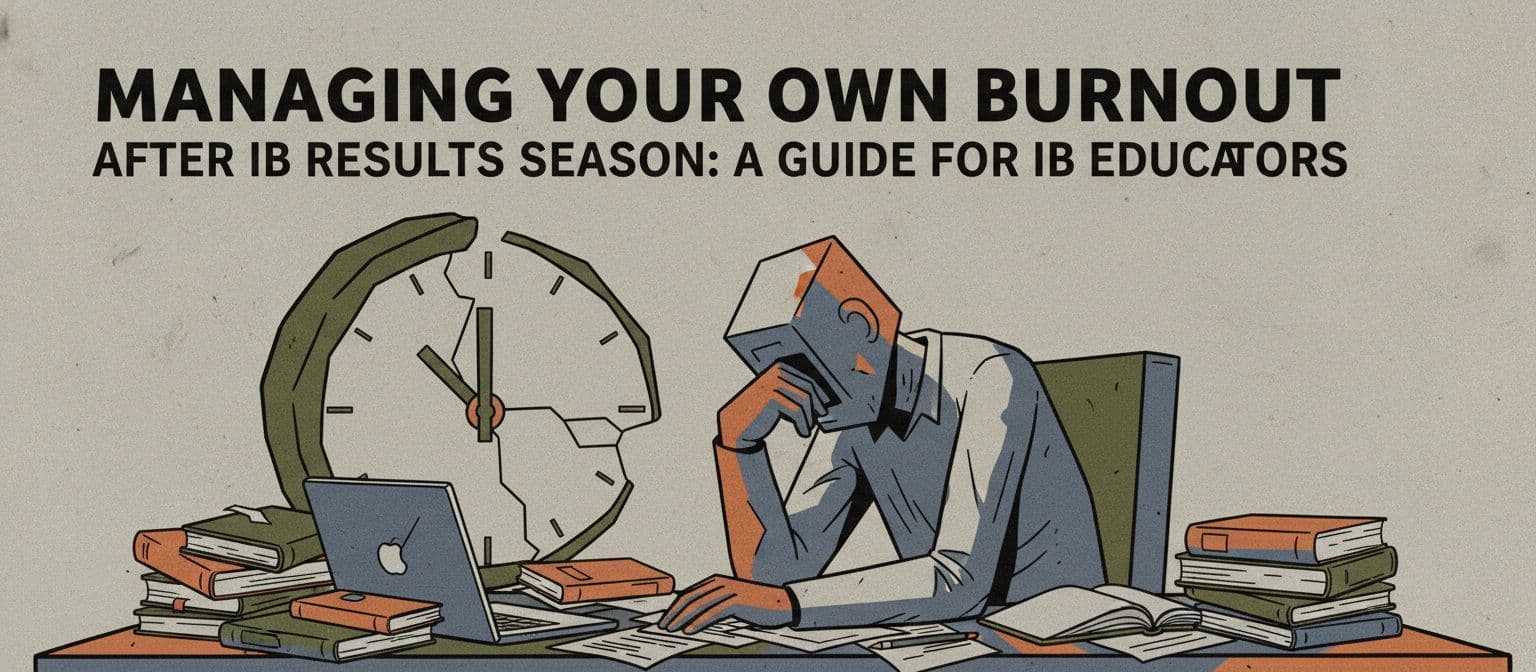
By the time everything settles, many educators find themselves emotionally and physically exhausted.
Unfortunately, teacher burnout after results season is rarely discussed. The focus naturally shifts toward student outcomes, leaving little room to acknowledge the emotional cost educators carry behind the scenes.
Recognizing burnout is not a sign of weakness. It is an essential step toward sustaining a long and meaningful teaching career.
Why IB Results Season Is Emotionally Demanding
Teaching within the IB framework involves far more than delivering classroom lessons.
Educators become mentors, advisors, evaluators, coordinators, counselors, and motivators throughout the academic year. Results season brings all of these responsibilities together in a short period filled with high expectations.
Several factors contribute to this emotional strain.
Teachers often feel personally invested in student performance.
Many spend months helping individual students overcome academic and personal challenges. When results are released, educators naturally celebrate successes and feel disappointment when students fall short, even when the circumstances were beyond anyone's control.
Another challenge comes from the pressure to remain available.
Emails arrive throughout the day. Parents seek clarification. Students ask about remarks or university admissions. School leadership may require reports and analysis. The work continues even after the official results are published.
Over time, this constant responsibility can quietly drain emotional energy.
Understanding Burnout Beyond Physical Tiredness
Many educators believe burnout simply means feeling tired.
In reality, burnout is much more complex.
It often appears as emotional exhaustion, reduced motivation, difficulty concentrating, or feeling disconnected from work that once brought satisfaction.
Some teachers notice they become impatient more easily.
Others struggle to enjoy activities they previously loved.
Many continue working through exhaustion because they assume the feeling will eventually disappear on its own.
Ignoring these warning signs usually makes recovery more difficult.
Burnout is not caused by a lack of dedication.
It often affects the most committed educators because they consistently place their students' needs ahead of their own.
Signs That You May Be Experiencing Burnout
Burnout does not look the same for everyone, but several patterns appear frequently among IB educators after results season.
You may notice:
- Feeling mentally exhausted even after sleeping.
- Losing enthusiasm for lesson planning.
- Constantly replaying student outcomes in your mind.
- Feeling guilty whenever you take time off.
- Difficulty concentrating on simple tasks.
- Increased irritability.
- Reduced patience during conversations.
- Trouble disconnecting from work related thoughts.
- Feeling emotionally numb rather than simply tired.
Recognizing these signs early allows you to recover before burnout becomes more serious.
Stop Carrying Every Student's Result Personally
One of the biggest emotional burdens IB educators carry is the belief that every student outcome reflects their own success as a teacher.
While excellent teaching certainly influences achievement, student performance depends on many factors.
These include:
- Individual study habits.
- Personal circumstances.
- Mental health.
- Examination performance.
- Time management.
- Motivation.
- External support systems.
Teachers guide the journey, but they cannot control every variable.
Accepting this reality is not lowering professional standards.
It is recognizing the limits of what any educator can reasonably influence.
Give Yourself Permission to Rest
Many educators feel uncomfortable taking genuine breaks.
They tell themselves they should begin preparing next year's lessons immediately.
Others spend the holiday period responding to emails or redesigning classroom materials.
Rest is often treated as something that must be earned.
In reality, recovery is part of professional responsibility.
An exhausted teacher cannot consistently provide meaningful learning experiences.
Taking time away from work allows both the mind and body to recover from months of sustained pressure.
Rest should not create guilt.
It creates resilience.
Create Healthy Boundaries After Results Season
Technology has made it possible for teachers to remain connected every hour of the day.
While this accessibility can help students, it also makes it difficult for educators to switch off.
Creating boundaries does not mean becoming unavailable.
It means establishing realistic expectations.
Consider practices such as:
- Checking work emails only during specific hours.
- Turning off notifications during evenings.
- Setting clear communication timelines.
- Protecting weekends whenever possible.
- Allowing yourself uninterrupted personal time.
Healthy boundaries help prevent emotional exhaustion from becoming a permanent condition.
Reflect Without Being Self Critical
Reflection is an important part of professional growth.
Self criticism is something entirely different.
After results season, many teachers spend weeks questioning every classroom decision they made.
They ask themselves whether they should have taught differently or spent more time with certain students.
Constructive reflection focuses on learning.
Self criticism focuses on blame.
Instead of asking, "What did I do wrong?"
Ask questions such as:
- What strategies worked well this year?
- Which classroom activities produced the strongest engagement?
- Which areas can be improved next year?
- What support would make my teaching more sustainable?
Reflection should produce insight, not self doubt.
Reconnect With the Parts of Teaching You Love
Results season naturally places attention on grades and university admissions.
Over time, educators may begin to associate teaching entirely with measurable outcomes.
It helps to remember why many teachers entered education in the first place.
Think about the student who gained confidence after months of encouragement.
Remember the classroom discussion that inspired genuine curiosity.
Recall the learner who discovered a passion for research because of your guidance.
These moments rarely appear on score reports, yet they represent some of the most meaningful achievements in education.
Lean on Your Professional Community
Teaching can sometimes feel surprisingly isolating.
Many educators privately experience stress while believing everyone else is coping perfectly.
In reality, colleagues often share similar challenges.
Speaking openly with trusted coworkers can provide reassurance and practical advice.
Professional communities also create opportunities to exchange classroom strategies, discuss workload management, and remind one another that no educator faces these pressures alone.
Sometimes, simply hearing another teacher say, "I understand exactly how you feel," can ease a great deal of emotional weight.
Prioritize Recovery Before Professional Development
Educators are lifelong learners.
Many teachers use school breaks to complete courses, attend workshops, or redesign curriculum.
Professional development is valuable.
However, recovery should come first.
Learning becomes far more effective when your mind has had an opportunity to rest.
Instead of immediately filling every free day with productive tasks, allow yourself time to recharge.
Your future students will benefit from an educator who returns refreshed rather than exhausted.
Develop Sustainable Habits for the Next Academic Year
Burnout recovery is important, but preventing future burnout is even more valuable.
Small habits practiced consistently throughout the year often produce greater benefits than occasional long breaks.
Examples include:
- Scheduling regular personal time every week.
- Sharing responsibilities where possible.
- Celebrating small classroom successes.
- Maintaining hobbies outside teaching.
- Exercising regularly.
- Prioritizing sleep.
- Taking short breaks during busy workdays.
- Reviewing workload before accepting additional commitments.
Sustainable teaching depends on sustainable habits.
Remember That Your Impact Extends Beyond Scores
IB results are important.
They influence university admissions, scholarships, and future opportunities.
However, they do not define the complete impact of an educator.
Teachers shape confidence.
They develop critical thinking.
They encourage curiosity.
They help students become better communicators, problem solvers, and global citizens.
Many former students remember how a teacher made them feel long after they forget their examination scores.
That influence cannot be measured by any assessment system.
Conclusion
The end of IB results season often brings relief, but it can also leave educators carrying invisible exhaustion.
Burnout is not evidence of failure.
It is often the consequence of months spent giving your time, energy, expertise, and emotional support to others.
Acknowledging that exhaustion is the first step toward recovery.
Give yourself permission to rest.
Reconnect with the reasons you chose education.
Reflect with kindness instead of criticism.
Set healthy boundaries that protect both your wellbeing and your passion for teaching.
The next academic year will bring new students, new challenges, and new opportunities to make a difference.
Your students need an educator who is present, motivated, and healthy.
That begins with taking care of the person standing at the front of the classroom.