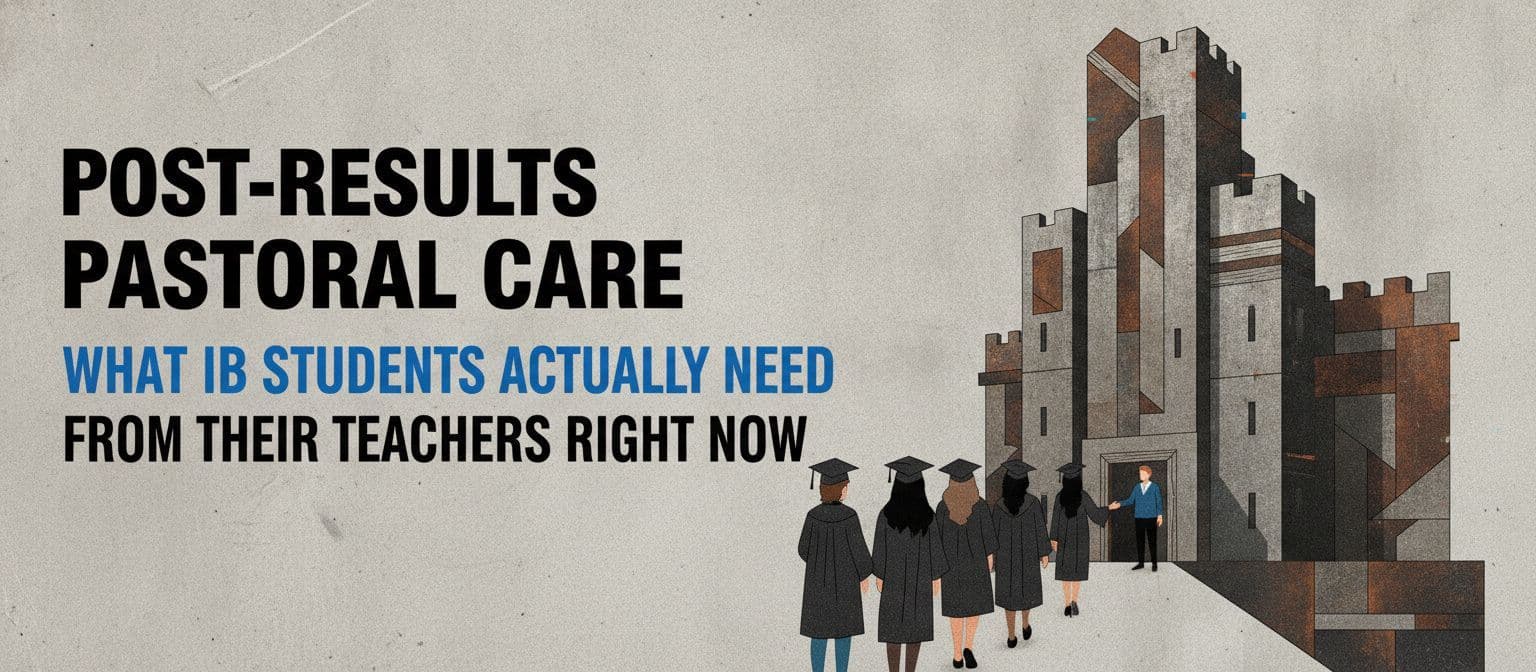
Results Day Is Not the End of the Journey
For International Baccalaureate students, results day is often viewed as the finish line. Months of coursework, internal assessments, extended essays, and final examinations culminate in a single set of scores. Families celebrate achievements, universities begin processing admissions, and schools reflect on another graduating class.
Yet, for many students, results day marks the beginning of an emotionally complex phase rather than the end of one.
Some students exceed their expectations and feel relieved. Others narrowly miss university conditions and face uncertainty. Many experience conflicting emotions that are difficult to express. Even students who achieve excellent scores may feel exhausted after months of sustained pressure.
This is where teachers play a role that extends far beyond academics.
Post results pastoral care is not about changing grades or discussing mark schemes. It is about helping students process one of the most significant milestones of their school life with empathy, perspective, and practical support.
Why Pastoral Care Matters After Results
Results often become a student's first experience with major success or disappointment in an academic setting.
How teachers respond during this period can shape the way students view themselves, education, and future challenges.
A thoughtful conversation can reduce anxiety.
A reassuring message can restore confidence.
A supportive teacher can remind students that one set of results does not define their abilities or potential.
The period immediately after results deserves as much attention as the months leading up to examinations.
Every Student Experiences Results Differently
One of the biggest mistakes schools can make is assuming that students react to results in predictable ways.
Some students openly celebrate.
Some quietly compare themselves with classmates.
Some avoid conversations altogether.
Others feel guilty for succeeding when close friends have not.
Teachers should avoid making assumptions based solely on grades.
A student with 44 points may still feel disappointed if they expected 45.
A student with 30 points may feel proud because they exceeded their personal goal.
Understanding the emotional context behind each result is far more valuable than focusing only on the numbers.
Listening Before Advising
Teachers naturally want to solve problems. However, immediately offering advice is not always the best approach.
Students often need someone who listens before someone who explains.
Simple questions can open meaningful conversations.
How are you feeling about your results?
What surprised you the most?
What are you thinking about right now?
These questions invite reflection instead of judgment.
Active listening helps students process emotions before discussing practical next steps.
Sometimes, the most valuable response is simply giving students space to express what they are experiencing.
Helping Students Separate Identity From Performance
Academic environments often encourage students to associate their worth with grades.
Over time, many begin to believe that high scores make them successful people while lower scores represent personal failure.
Teachers have the opportunity to challenge this mindset.
A student's score reflects performance on a particular assessment under specific conditions.
It does not measure kindness.
It does not measure creativity.
It does not measure resilience.
It does not measure future success.
Helping students understand this distinction protects their confidence during moments of disappointment and encourages a healthier relationship with achievement.
Supporting Students Who Miss University Conditions
Perhaps the most stressful situation after IB results involves students who narrowly miss university offers.
These students often feel that years of hard work have suddenly become meaningless.
Teachers can make an enormous difference by helping them focus on solutions rather than panic.
This support may include:
- Reviewing university options.
- Discussing alternative pathways.
- Explaining remark procedures where appropriate.
- Helping students communicate professionally with admissions offices.
- Providing reassurance while decisions are being made.
Students need calm guidance during this period.
An informed teacher can reduce uncertainty simply by helping students understand the process ahead.
Celebrating Success Without Creating Comparison
Schools naturally enjoy celebrating outstanding achievements.
Top scorers deserve recognition for their dedication and perseverance.
However, celebration should never unintentionally diminish the accomplishments of other students.
Every student's journey is unique.
One student may celebrate earning 24 points after overcoming significant personal challenges.
Another may celebrate achieving their first university offer.
Recognition should acknowledge effort, growth, resilience, and perseverance alongside academic excellence.
This creates a school culture where achievement is viewed more broadly than a leaderboard.
Recognizing Students Who Stay Silent
Not every student asks for help.
Some withdraw from conversations.
Some avoid social media.
Others disappear from school communication entirely.
These students are easy to overlook because they rarely create visible concerns.
Teachers should consider reaching out personally to students who become unusually quiet after results.
A brief message can make a meaningful difference.
Simply letting students know that support remains available communicates care without placing pressure on them.
Sometimes the students who appear strongest are the ones carrying the greatest emotional burden.
Encouraging Reflection Instead of Regret
Many students replay the past after receiving results.
They wonder whether they should have studied differently.
They question missed opportunities.
They focus on mistakes they cannot change.
Teachers can gently shift this mindset toward reflection rather than regret.
Reflection asks:
What did I learn?
What habits worked well?
What would I do differently next time?
Regret focuses on what cannot be changed.
Reflection prepares students for future success.
This subtle difference encourages growth while reducing unnecessary self criticism.
Supporting Families Alongside Students
Parents also experience strong emotions during results season.
Some celebrate enthusiastically.
Others worry about university admissions.
Some unintentionally place additional pressure on students while trying to help.
Teachers can support families by encouraging balanced conversations.
Parents benefit from reminders that emotional wellbeing matters just as much as academic outcomes during this transition.
Helping families maintain perspective creates a stronger support system for students at home.
Practical Ways Teachers Can Offer Post Results Support
Meaningful pastoral care does not always require formal programs.
Small actions often have the greatest impact.
Teachers can:
- Send personal congratulations to students regardless of scores.
- Invite students to discuss future plans.
- Offer guidance about university communication.
- Check in with students who appear withdrawn.
- Celebrate personal growth alongside academic performance.
- Encourage realistic optimism about future opportunities.
These actions demonstrate genuine care while helping students navigate an emotionally significant period.
Preparing Students for Life Beyond School
One overlooked purpose of pastoral care is helping students transition into adulthood.
University, work, and life will continue presenting moments of success and disappointment.
Students who learn healthy ways to process outcomes become more resilient in the future.
Teachers are uniquely positioned to model balanced responses.
They can celebrate achievement without glorifying perfection.
They can acknowledge disappointment without encouraging hopelessness.
Most importantly, they can remind students that learning continues long after school ends.
The Last Lesson Students May Remember
Years from now, many students will forget specific classroom lessons.
They may struggle to remember equations, literary analyses, or historical case studies.
What they often remember instead is how teachers made them feel during important moments.
The conversation after disappointing results.
The encouragement before a university appeal.
The congratulatory message celebrating perseverance.
These moments become lasting memories because they occur when students feel vulnerable.
Pastoral care is not separate from education.
It is education expressed through empathy.
Building a School Culture That Extends Beyond Results
The strongest IB schools understand that education is about developing capable, thoughtful, and resilient young adults.
Academic excellence remains important, but it should never come at the expense of emotional wellbeing.
Post results support reflects a school's values more clearly than any promotional brochure.
When students know they will be supported regardless of the outcome, they develop greater confidence, stronger resilience, and a healthier relationship with learning.
Teachers who invest time in these conversations remind students that they are valued not because of the number printed on a results sheet, but because of the people they are becoming.
Final Thoughts
IB results represent an important milestone, but they are only one chapter in a much larger story.
For some students, results bring celebration.
For others, they bring uncertainty, disappointment, or difficult decisions.
In every case, compassionate teachers have the opportunity to shape what happens next.
Post results pastoral care is not about offering perfect answers.
It is about being present, listening without judgment, providing practical guidance, and helping students maintain perspective during a defining moment in their educational journey.
Long after the scores are forgotten, students are likely to remember the teachers who stood beside them when they needed support the most.